You may think me naïve, but I’m one of those folks who believe in the basic goodness of others. Given the chance, people tend to do what’s right. I appreciate this outlook on life, and although I’ve been burned a few times, it generally makes me a happier person, and for that, I am thankful.
However, I’ve come to realize that life isn’t quite that clear-cut.
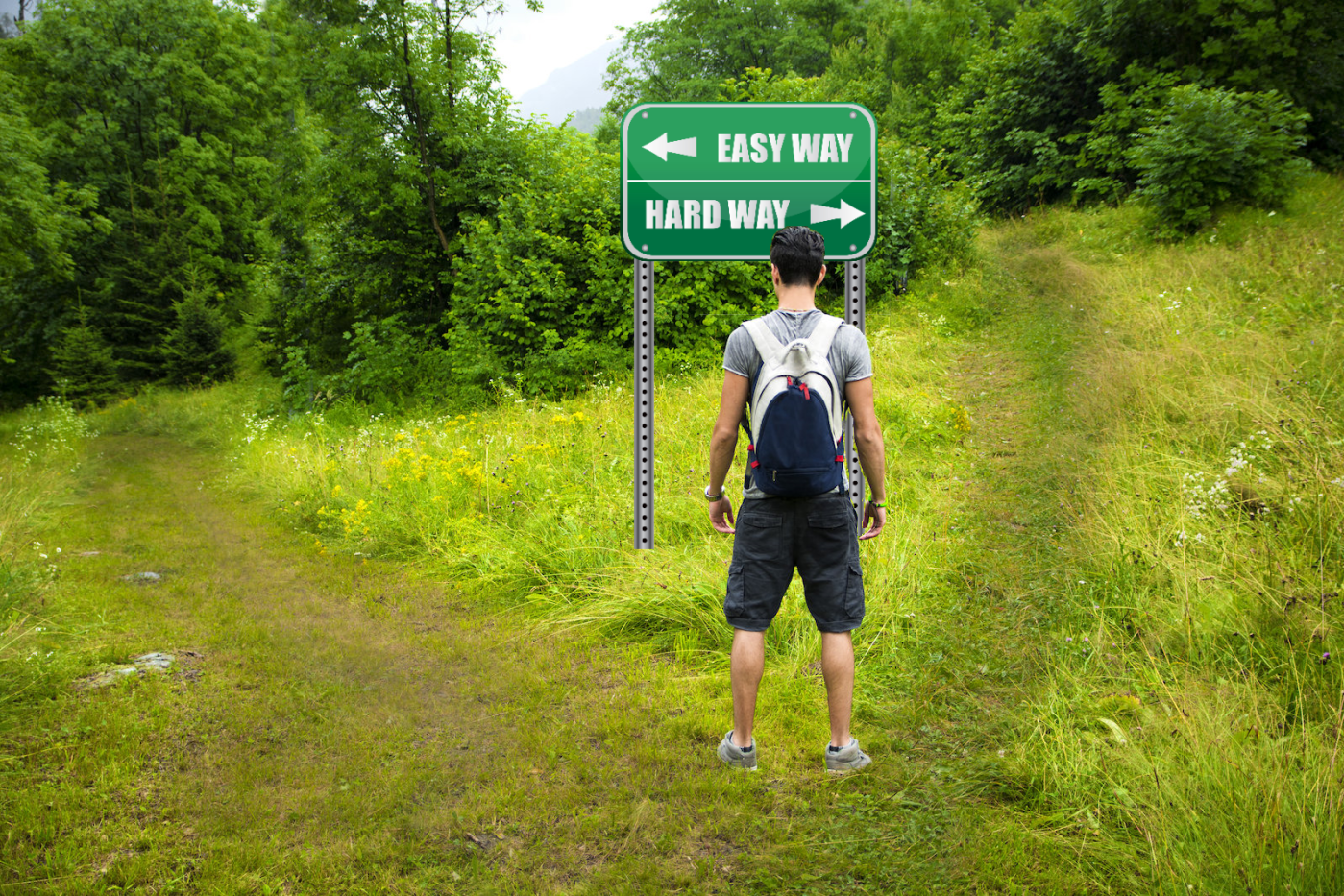
We often simplify things as good vs. evil or right vs. wrong, but for most of us, it’s more subtle than that. It often boils down to a choice between what is right and what is easy.
If doing the right thing is easy, I firmly believe that most people would choose it almost always. But when there’s effort involved or sacrifice required, it becomes harder to choose right when the easier option is, well, much easier.
These are the “eat your vegetable moments” – those times when you know what is good for you or for others, and you have to make a choice.
Let’s explore some wildly different examples:
Exercise: For most people, the thought of exercising starts – at least initially – as something they may not want to do, but deep down, they know it’s good for them. Hopefully, it quickly becomes something they find beneficial and rewarding. However, based on the number of inactive gym memberships at any given time, I think most people still find exercising to be a chore. Nonetheless, few would argue that exercising is bad for them. It’s just not always enjoyable for everyone.
McCarthyism: Now, let’s turn to a more dramatic example. McCarthyism is widely regarded as a dark period in American history, during which Senator Joe McCarthy led the charge against supposed Communist infiltration in the US. While McCarthy was eventually stopped and even censured by the Senate, he found many followers who were happy to support him during his four-year “crusade.”
Litter: How often do we walk by a piece of litter on the ground? Personally, I’ve done it, often citing reasons like not wanting to pick up someone else’s potentially dirty trash or not wanting to go out of my way to find a trash can. On the other hand, my wife has always gone out of her way to pick up litter, as she sees it as a small way to care for the world around her. (Yes, I definitely married up.)
So, what’s the solution when we’re faced with “easier” paths that aren’t necessarily the right ones?
- We need to focus on the end goal. It means taking a step back from time to time and reflecting on the direction we’re heading. Not exercising could lead to health issues and even premature death. Not completing work on time could result in poor grades or problems at your job. History is replete with examples of people blindly following a leader without question, often leading to hardship and tragedy.
- Take small steps and make them a habit. It requires self-awareness, but any behavior change requires focusing on and reinforcing small victories. If you don’t have an exercise regimen, start with something easy or tolerable, maybe twice a week. Successfully maintain that routine for 3 or 4 weeks, and then either add a third day or increase your exercise time by 10 minutes. Set yourself up for success.
- Seek approval from within. While it’s great to receive affirmation from others, you need to be your biggest advocate. Regardless of the size of your circle of friends and family, the only person who will be with you your entire life is yourself. Value yourself and your opinion so that when you do succeed, you can provide yourself with positive reinforcement. If you fail, hold yourself accountable and strive to do better. Don’t let the praise or condemnation of others sway you based solely on the social pressure or the feelings – positive or negative – that they may invoke for you.
As a final illustration, let’s look at the so called “Silent Generation” who lived and fought in WWII. They are often held in the highest regard, and are typified by men and women who did things they were not necessarily comfortable doing or even wanted to do but who stepped up and did them. And who then, by-and-large, did not talk about it.
They did not parade around town with their medals, or gather the grandkids around to tell them harrowing tales of their bravery. At best, they would acknowledged that they fought in the war or maybe stepped into a role to support their family or their country, but often with a sense of “it was no big deal” or “I just did what needed to be done”.
Personally, I find that approach to life to be inspiring. It speaks to living a life in service to others, of putting their needs ahead of our own. Of choosing to do what’s right over what’s easy.
So the next time we’re faced with a choice, I challenge each of us – myself included – to pause and think a little about what is the right thing to do. And then to be willing to stretch outside of our comfort zone if it makes that right thing possible. And give yourself grace if you don’t always meet that higher bar. We’re trying to affect long-term change and a one-off failure should be seen as just that – a one time occurrence. Remember to stay focused on your ultimate goal and to keep after it.
Know that I’m pulling for you!


thanks
LikeLike