
With the recent death of Pope Francis, I came across a quote of his that I found very thought-provoking:
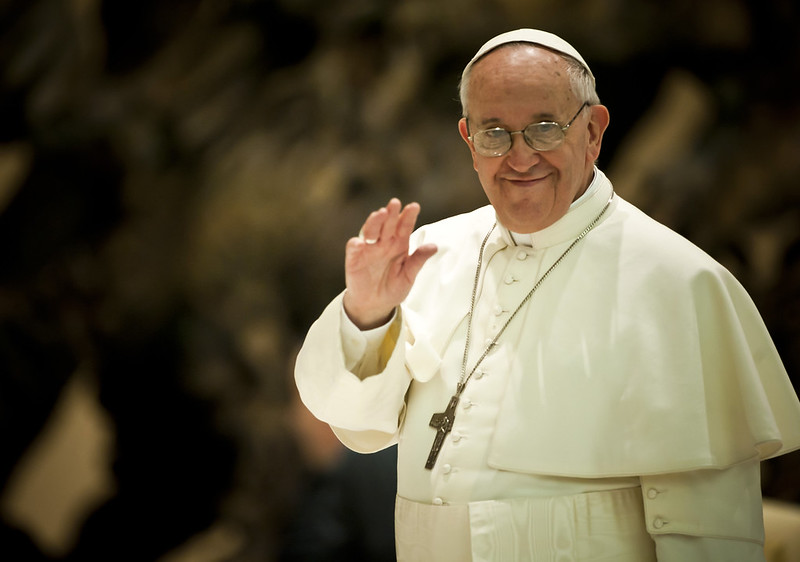
“We do not need to be afraid of questions and doubts because they are the beginning of a path of knowledge and going deeper. One who does not ask questions cannot progress either in knowledge or faith.” – Pope Francis
How often do we find ourselves in a place where we are not sure of ourselves? If you’re like me, this is probably pretty familiar territory.
I don’t think I’ve ever lived a day where I didn’t have something bring me up short with a “well, what do I do here?” And, depending on the importance of whatever is happening, I very much feel the weight of trying to make the right choice.
This connects to something I’ve written about before regarding fear of failure – often what we’re really afraid of is not having the knowledge or experience to make the right choice. But Pope Francis’s words suggest that uncertainty itself isn’t the enemy; willful ignorance is.
I remember a colleague who admitted they didn’t understand a new system we were using at work. Rather than pretending competence, she asked questions, took the online training sessions, and eventually became one of our most effective users. Her initial ignorance became a pathway to expertise.
Returning to Pope Francis’ lesson, I find it especially intriguing as it acknowledges that we do not have all the answers, and that ignorance should be seen simply as a starting point not a condemnation of ourselves. Yes, it can be an uncomfortable place to be in, but perhaps the key is to acknowledge the cause of our discomfort – the fact that we have identified missing knowledge – and not hold ourselves accountable for not knowing everything. That’s simply impossible and it seems unfair to expect otherwise of ourselves or others.
That said, willfully remaining ignorant is something we should hold ourselves accountable for, especially if we judge that information gap to be important to address. I don’t necessarily need to know how a watch works to tell the time, but if my watch stops working, then I need to decide if I need to fix it, have it repaired, or a find a replacement – all of which require different sets of knowledge to act upon.
Another phrase that comes to mind is being a “lifelong learner.” It’s a term that carries a positive connotation as it states that someone never stops learning no matter their age. We admire the person who, whether in their twenties or eighties, is always working to become smarter. Yet isn’t it also true to say that a lifelong learner is also a consistently ignorant person as well? That they lack complete knowledge is celebrated with one description, and perhaps vilified with the other, yet they both acknowledge the same reality.
Ultimately, we should never condemn ourselves simply for being ignorant; rather, we should only face criticism when we choose to remain that way.
Pope Francis’s insight offers us permission to be beginners, to sit comfortably with not knowing, and to see our questions as doorways rather than dead ends. In a world that often demands immediate expertise, perhaps the most courageous thing we can do is admit what we don’t know – and then set about learning it.
Know that I’m pulling for you.
 What If...
Leave a comment