The idea for this post started in the silliest of ways.
Recently, I checked out one of the newer Star Wars TV shows. I’d heard how good it was and I was honestly excited to see what everyone was so excited about.
I watched the first one and was a little underwhelmed but wasn’t too concerned. Then I watched the second and felt the same. Ultimately, I made it four episodes in and then stopped. I would certainly agree that the acting was fine, the special effects and aliens were impressive but the story didn’t grab me. I just moved on to other things. Then, a few days ago, I had a chance to catch the next episode and my reaction was “eh, I don’t really care to see it.”
Still, I thought back to all the glowing comments I’d heard and was curious to see how I could be so out of step with the rest of the world. I did a search asking “Why is {show} boring?” and quickly found multiple Reddit threads with that theme. Feeling somewhat relieved to see similar thinking, I opened one and scanned the first half dozen posts.
Not too surprisingly, the first statement was from someone who found the show boring. That was immediately met with a response from someone else saying that the show was awesome and that the first person was wrong. That was followed quickly by a third person – who was clearly in the “boring” camp – who said that, no, the second person was an idiot but then they were refuted by post #4. And so the back-and-forth continued, each side taking their turn to belittle the other.
Stepping away from this particular TV show, I started to reflect on the mental process that I, and apparently many other people, appear to have gone through. Because my opinion did not align with the majority of what I’d heard about this show, I wondered if I was alone in my thinking. And if I was alone, could I perhaps be wrong?
When I discovered that others agreed with me, I felt better, reassured even, in my point of view. But then looking at each subsequent post in those threads, it was clear that people perceived a definitive right and wrong answer here, even though what was “right” differed from person-to-person.
That was really interesting to me as it speaks to a certain level of insecurity many of us seem to feel. By viewing the world as having only two states – right-or-wrong, on-or-off, black-or-white – it certainly perpetuates an “us vs. them” mentality, and I think we all reasonably want to be in the winning camp. But in reality, I don’t believe that there are that many clear absolutes in our world. Conversely, there is room for differing opinions and that simple fact actually makes us the better off for it.
There have been various studies that show that creative (or divergent) thinking diminishes the older we get. One illustrative story I’ve heard in various forms follows students over the years starting in kindergarten. The class is asked who’s a creative thinker and wants to be an artist when they grow up; pretty much every kindergartners hand shoots up. By 2nd or 3rd grade, the number of hands being raised is down dramatically and so that pattern goes until, in high school, maybe only 1 or 2 hands are raised and certainly nowhere as enthusiastically as their 5 year old selves once did.
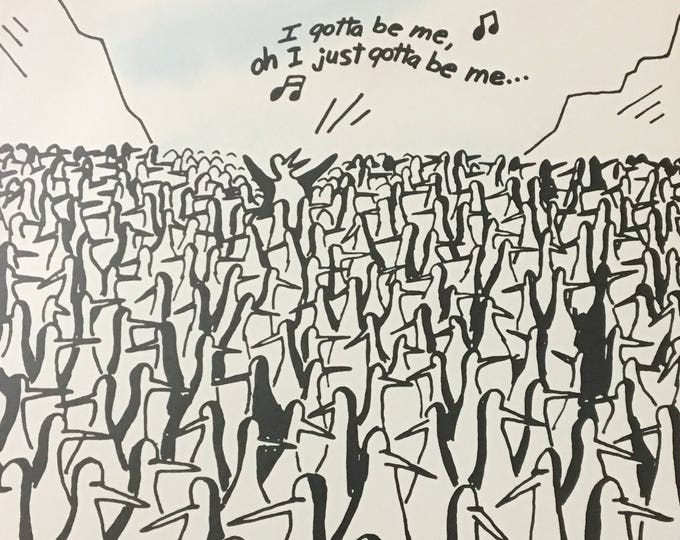
The subtle point is that young children are not yet trained to conform to societal norms and aren’t conditioned to seek validation or acceptance by their peers. But the older we get and the greater importance we place on “fitting in” – or maybe just not standing out too much – the less likely we are to do something that places us that position. And, by extension, I can see where my unease at holding an unpopular opinion came from, and possibly why the Reddit posters were so adamant at shutting down the others who disagreed with them.
Now let’s take this to a more innocent example. Say we get asked what’s our favorite dessert. The fact that my wife might say “apple pie” while I’d answer “ice cream” doesn’t mean they aren’t both delicious options. In fact, I doubt there’s been many arguments about this in our collective history. So, clearly, there’s some differences of opinion that cause a reaction while others do not. Thinking upon this, I can suggest three broad buckets that these might fall into:
- It’s something inconsequential. The fact that I prefer ice cream for dessert while my wife likes apple pie is fine and there’s never been an argument over which is better. They’re both enjoyable… and even better together! So holding different opinions in these instances do not push us into an unwelcome spotlight
- It’s something new and opinions vary greatly. The TV show that prompted this post is an example of this. The show’s popular enough to have gained widespread attention, and there are people with some widely different opinions. So I think it’s understandable that we might debate this new thing and figure out where it fits in our world… and try to make the case that our point of view is the correct one
- There’s high stakes. Here, an excellent example is a presidential election. Whoever wins is going to have a significant impact on everyone’s lives for the next four years, so it’s understandable that folks are motivated to promote their candidate as being the best choice. In these cases, where the outcome is more consequential, it’s reasonable and even desirable to debate differing points of view
(I could make the case for a fourth bucket based on the way things are communicated and, specifically, whether or not I can remain (relatively) anonymous. It’s a lot easier to say something is absolute garbage if it’s username CrackerJackX47 saying it compared to having Chris Spanier’s name by it. Still, we could fold this under the high stakes option though, in this case, the impact is to our own personal reputations.)
The bottom line to all of this isn’t that I’m suggesting that we all need to agree with one another, or that there aren’t things worth debating and fighting for. But perhaps we need to be more thoughtful about what merits that kind of effort and debate on our parts.
To help with that, let me propose the 10 year rule as a way to think about this. Just pretend you’re a decade in the future and then honestly answer if people will likely care about whatever you’re about to make a stand for (or tear someone down about). If not, then it probably is not worth your time and effort.
For myself, at least, I think it’s time to accept that someone being right does not necessarily require someone else to be wrong. Be comfortable finding your own voice and be willing to share it with the world, even if not everyone will agree. We all might just get a bit smarter as a result of your taking the chance.
Know that I’m pulling for you!
 What If...
Leave a comment