

I recently picked up a book to read just for enjoyment but, even with this piece of escapist fiction, I found myself reflecting on the story and some of the lessons contained therein. The book has a medieval setting and there is a strong class structure in place with the nobles regularly looking down upon the commoners (from whom, of course, our hero comes).
The high-born population in the story certainly see themselves as better than most everyone else and it got me thinking about my own perspective of the world.
I was raised to believe in the equality of all people but, if I’m being honest, there are times when I feel like I’m better at certain things than others. At the same time, I think that’s balanced by a recognition that they could say the same about me in plenty of other areas. So feeling superior at times is not necessarily a bad thing and, I trust, more of an acknowledgement that we all have our own strengths and weaknesses.
However, when those feelings bleed into other areas and make us think that we’re just plain better than others, that’s when things get ugly. Like the nobles in my book, we prop ourselves up by putting others down, focusing on all their short-comings and seeing none of our own. That is close-minded and does damage not only to others but to ourselves as well as we fail to see areas that we can improve upon or that can be better handled by someone with more knowledge or talent than what we possess.
As a way to combat this way of thinking, I believe it is a very good practice to try and be sincerely humble all the time. Not a false, “just for show” humility but a true and genuine belief that others are just as worthwhile as I am and that they have strengths that outshine my own in many areas. This may take some practice and reinforcement but it is absolutely worth the effort.
The irony is that a strong sense of humility can underscore the greatness in someone, though it’s usually only perceived by others. Let me share a couple of stories that have illustrated this for me.
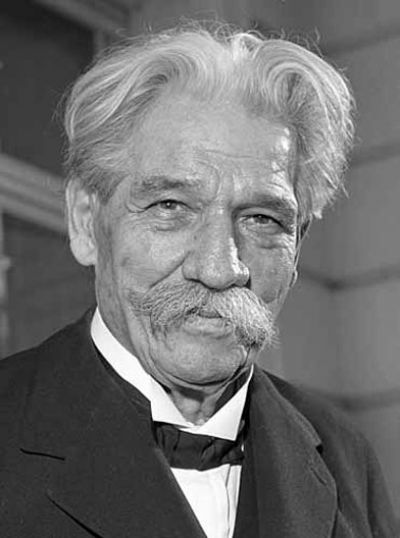
Dr. Albert Schweitzer
The first one is often referred to as “A Sermon Walking”. It describes that how, in 1953, reporters and city officials were awaiting the arrival of Dr. Albert Schweitzer’s train as he’d won the Nobel Peace Prize. When Dr. Schweitzer finally arrived and he emerged onto the platform, everyone eagerly stepped forward to greet him.
Now, Dr. Schweitzer was a very tall man (six feet, four inches) and as he was thanking everyone for the warm welcome, he saw over the group’s heads that an elderly woman was struggling with her bags a little ways off. He excused himself, walked over, picked up the woman’s suitcases and then escorted her to her bus. After helping her aboard, he smiled and wished her a safe journey. Returning to his group, he then apologized for having kept everyone waiting. It was at that moment when someone in the reception committee was overheard to say “That’s the first time I ever saw a sermon walking.”
My second, more personal story, has to do with a man I have looked upon as a mentor for many years. He was one of the top two or three leaders at my company, and earning well over 7 figures based on the amazing performance of his division each year. But he was also one of the best examples of humility that I have ever encountered.
Many years ago, our company was having it’s annual employees picnic and my wife & I were enjoying our meals when my new boss (this was not my mentor) came up to say hello. She stood by our table, quickly introduced herself and then proceeded to talk over my wife, making some unusual and mildly inappropriate comments about the way British people dress (she was telling us how she’d previously worked in London for a very prestigious firm). She then took off abruptly when she saw the CEO, getting my wife’s name wrong as she left to try and intercept him. As the dust settled from her hasty departure, we just sat there in mild amazement and amusement, shaking our heads.
Maybe five minutes later, along came my mentor. He smiled broadly, asked if he could join us and then sat down. He has a remarkable memory and greeted my wife by name and asked how she had been and intently listened to her answers. What followed was a lovely few minutes of light conversation before he excused himself saying he wanted to visit with some others before everyone went home.
As he stood up and said his goodbyes, he asked if we were done with our meals (we were) so he picked up our plates and took them to a nearby trash can. Smiling, my wife turned to me and observed “that’s the first time I ever had a millionaire clean up after me.”
The reality is that both of these stories describe very small gestures but which I believe speak volumes about the people they are about. Neither mad did what they did for recognition or with having any expectation that their actions would be remembered by others. Instead, they simply chose to act out of kindness and humility.
It’s true, Dr. Schweitzer still won the Nobel Peace Prize and the accompanying monetary award and my mentor was still getting a very healthy paycheck – though, perhaps not surprisingly, both men were generous with what they received but those are stories for another day. The important lesson here is that truly great people often carry themselves with humility, emphasizing not what sets us apart but rather seeking out that which brings us all together as worthy equals.
Know that I’m pulling for you!
 What If...
Leave a comment