I admit it. I like being told that I’m right. It’s reaffirming, feeds my ego a bit while building up my confidence. It’s external validation and it feels good. Plus, we don’t spend time discussing anything further as my point of view has been declared the winner. Clean. Simple. Efficient.
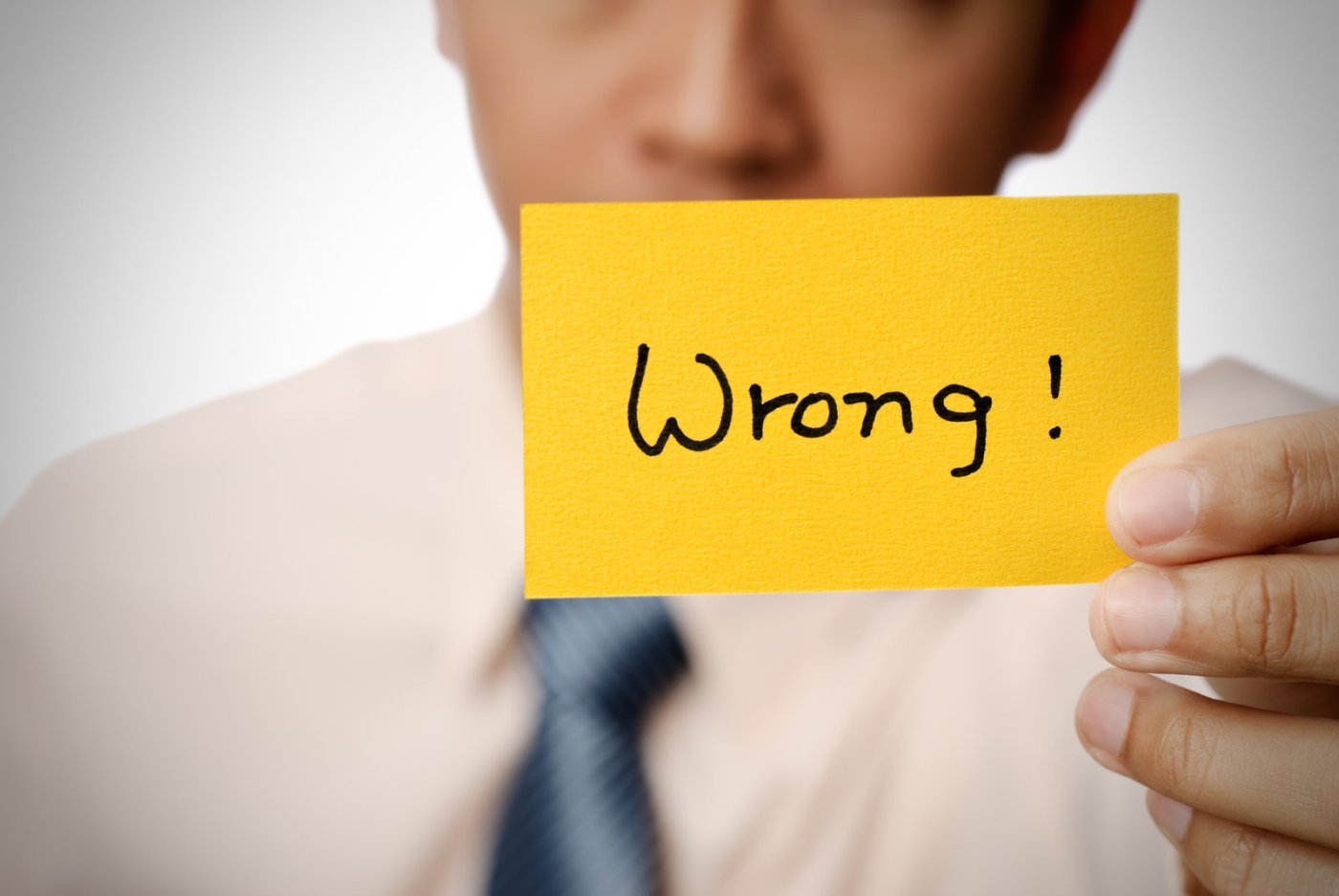
Still, with that said, I think it’s actually better for us to tell someone – politely – that we think they could be wrong. (Also, note the very important inclusion of the word “could” … we’ll revisit that in a bit.)
Being told you’re wrong affords everyone involved in the conversation to think more deeply about the issue at hand, to practice active listening and to honestly engage in respectful debate and discussion. Yes, it can be time-consuming and maybe even frustrating, but I find that if I and others approach this with the right mindset, it can be infinitely more rewarding for everyone involved.
Being told you are right is frankly easy because you’ve gotten superficial alignment. But it comes with potential baggage – that there isn’t a shared understanding of the details or assumptions being made; that, because there was potentially little thought that went into the agreement that it hasn’t been internalized by your listeners; and, perhaps most dangerous for us, it starts to establish a precedent that the we are always right and should never be questioned.
If you think about the broad caricature of a dictator, you may imagine one or more “yes men” surrounding them, telling them that they are absolutely correct about everything. In Hollywood at least, that’s almost a sure sign that this is the bad guy and they’ll get theirs in the next 90 minutes or so.
It is too easy to want a quick answer, and one that aligns with our own perspective. I’m just as guilty of that anyone. But I’ve tried to school myself to think before I open my mouth and to ask an honest “why do you say that?” when someone challenges me. Too often, I will realize that my own decision was not as well thought out as I might have hoped and being questioned on it forces me to think deeper… and even, sometimes, to change my point of view.
Setting aside personal politics and which party each of us may align with, one of the best election debates I can recall was the vice presidential debate from 2000 between Senator Joe Lieberman and (eventual) VP Dick Cheney. As I recall, both men were seated on either side of moderator Bernard Shaw from CNN, and they had a thoughtful, civil conversation about a number of issues. But there was little posturing, both men were gracious to the other and, by the end, I found myself wishing we could somehow flip things at put these two as the top of their tickets.
It illustrated to me what two people, with differing opinions, could accomplish by listening, thinking and communicating. It was a high-water mark for me in US politics and still something I reflect on two+ decades later.
The final point I wanted to come back to was the use of the phrase “could be wrong.” I really like using that because it not only is less threatening than “you’re wrong” but it also invites a conversation to begin. You are introducing the thought that there may be another, perhaps better answer but still leaving room for exploration and debate. That is where the real traction can happen because if everyone engages in an honest and open discussion, we all benefit.
So that’s the challenge to each of us. To be open to people having different opinions than our own and then to engage in an exploration of what those differences are and how we can go about to thoughtfully consider what’s actually correct, even if that means that our own positions may need to change or evolve.
Imagine what the world would be like if we all did more of this.
Know that I’m pulling for you.
PS. If you’re curious to see that vice-presidential debate I talked about above, you can watch it here.
 What If...
Leave a comment