

In keeping with the Valentine’s Day theme today, I wanted to write about mind maps, a tool that I fell in love with many years ago (see what I did there?). Mind maps have been around for a long time but I’ve been surprised by the number of people I’ve encountered professionally who have never heard of, much less used, one.
One of the reasons I love mind maps is that they exercise both the creative and the logical sides of my brain… everyone is happy. Moreover, while there’s a general structure – more on that below – a mind map has a level of freedom and fluidity to it that mirrors our thought processes. It really empowers you to proceed organically in how you capture information while not restricting how you have to think about it.
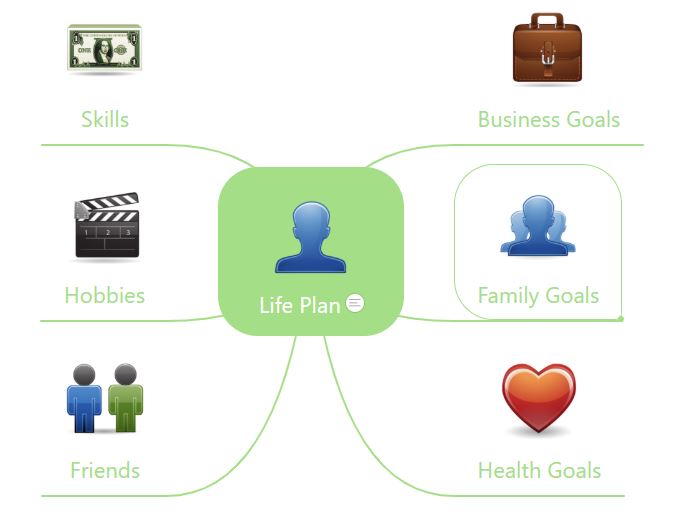
It all starts with a central topic placed right in the middle of the page/screen. It could be anything – a concept for discussion, a project, a person, whatever. (To illustrate a simple map, I’m using MindMeister’s template for a life plan.)

You then start to build out branches for sub-topics that relate to your core theme…

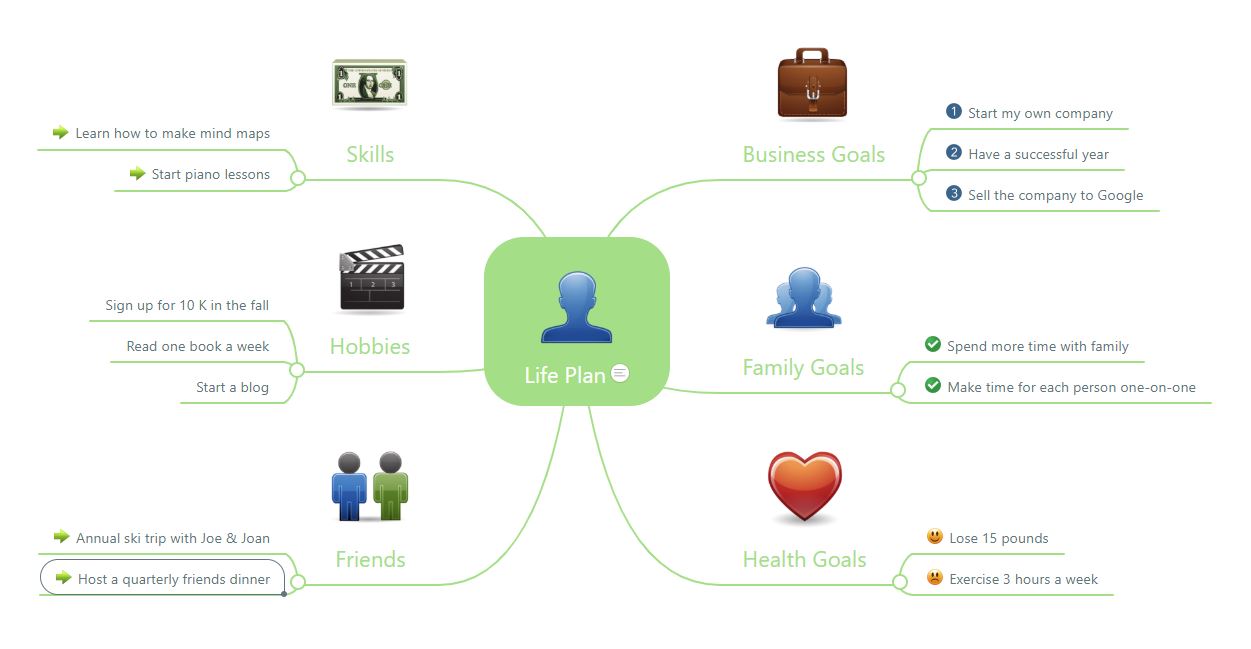
Keep adding topics as they occur to you…
You can add levels and layers to your mind map…
Going as deep as you can or want to…
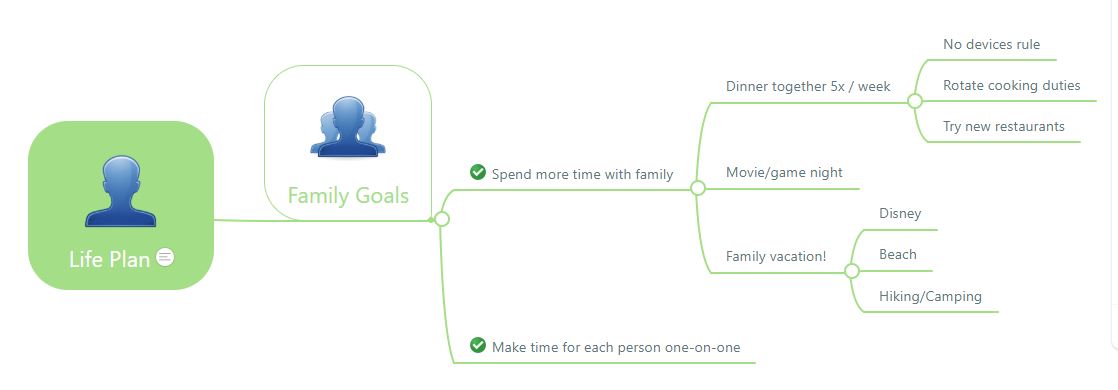
One thing I need to call out there. My illustration suggests a very linear process… starting with a central concept then adding the “children” and then the “grandchildren” and so on. If that works for you, then great. However, as noted earlier, mind maps are meant to work in a way that mirrors your own thought process so there’s no set path to follow here.
I’ve seen people start a branch and then focus on fully building it out before moving onto the next one; other people like going level-by-level as a way to slowly drill into their topic. Personally, I’m a lot more scattershot in my thinking and will jump all over as thoughts occur to me. No one way is right for everyone or even every mind map. They key is to capture everything as it occurs to you so there should be very little lost or forgotten in the process. Just write the idea down and then move on.
A few other thoughts about using mind maps:
- Don’t get hung up on the structure, at least initially; focus instead on capturing your ideas and then organize them when there’s a natural lull in the ideation
- If you’re working with a team, don’t debate points as they’re suggested. Just write them down and then come back to discuss later
- Mind maps are meant to be fluid so move, group, break apart and shuffle the map as your thinking evolves
- Mind maps can be applied in a lot of ways – brainstorming, organizational charts, project plans, checklists and more
- There are many tools to create mind maps. I’d encourage doing your first one on paper just to try it out. If you’re like me, however, there were a lot of benefits to moving to electronic tools (software, apps and websites). Many of them have free trials so check a few out and see which one works best for you
I hope I’ve intrigued you enough to give mind maps a try if you haven’t already. There are lots of other great systems out there but I’ve yet to find one that works better than a mind map at capturing and organizing the output of a fast-paced creative process. I hope you come to love them too.
Know that I’m pulling for you.
Chris

 What If...